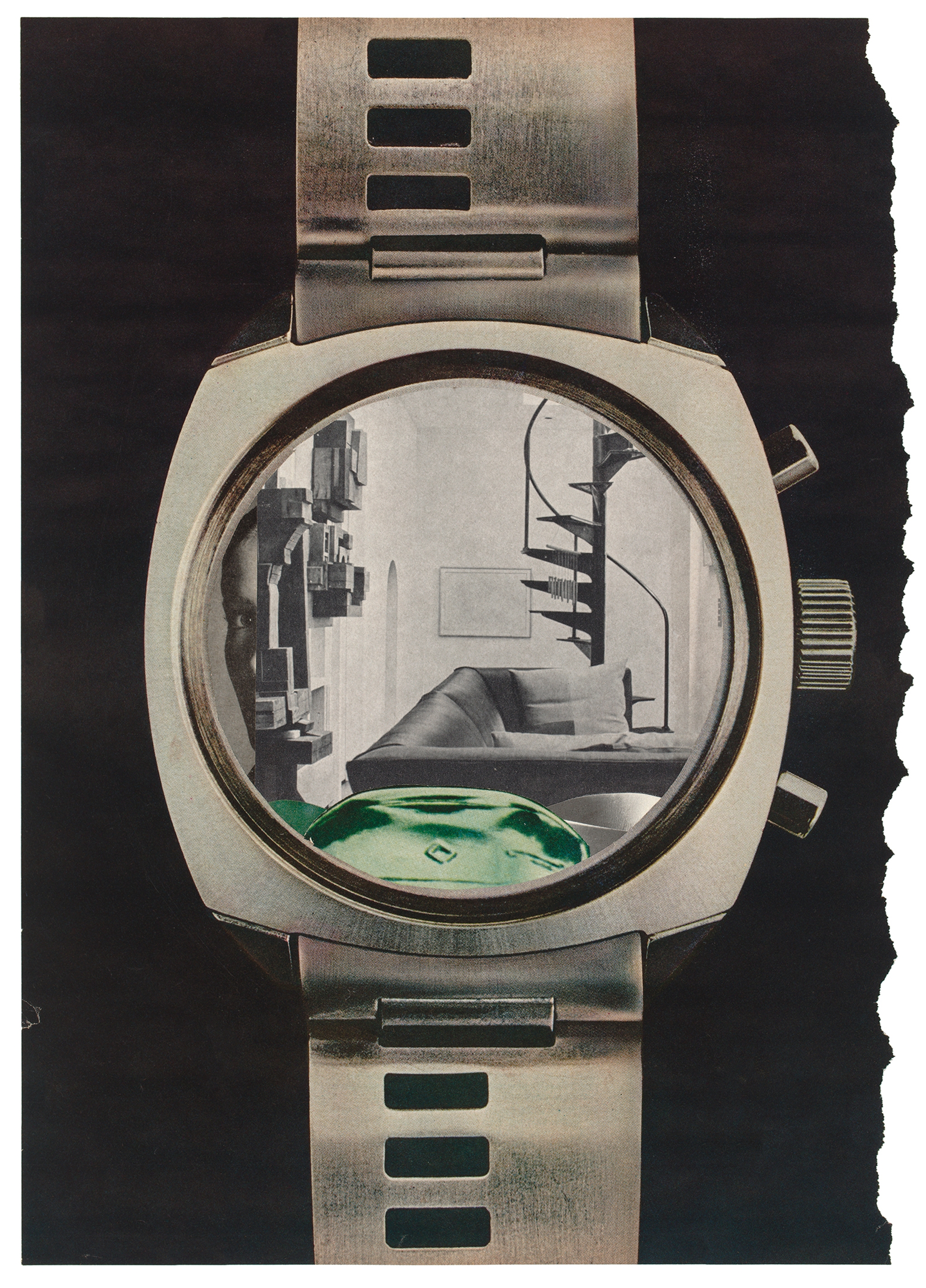
I began spending time at the Esalen Institute in Big Sur, California when I was in my late twenties. Burned out in LA, I packed up my SUV and took off up the coast on what would soon be one of the foggiest days of the year. By the time I arrived in frozen-in-time, off-the-path, no-cell-service Big Sur, the fog was so thick that I couldn't see the front of my car. Hobbling along, I practiced the forgotten art of watching the odometer to inch my way into my place of rest.
It was November 2016. I was grasping for answers to the political climate and wrestling those with my own pending return to the South. Armed with only a well-worn copy of Krista Tippett's Becoming Wise, I awoke – somehow surprised – at the clear view of the magnificent jagged coast. Cold, briny, sharp: it was, and remains, the most beautiful place I've experienced.
Esalen is a place where the land feels significant, storied. It is a privilege to touch feet on her grasses, to bathe in her sulfur waters. You are at once connected to place, to land, to coordinates in space and time in parallel to idea, thought lineage, experiment, growth. It's a simultaneous dancing of roots touching down and aura reaching up and out, extending beyond one's known sense of self. You leave with a widened aperture of possibility.
Esalen has its own language. Intimidated at first, I admit I spent my first meal eating alone in my car. But before long, I befriended my bunkmates and enjoyed that rare type of meeting where you're more likely to discuss the origins of consciousness with a new friend rather than anyone asking where you're from or what you do. By the time I heard the word "gestalt" for the tenth time, I scribbled it in my journal, unable to search it online without cell service or wifi. I spent three more days swimming in the word from different angles, turning it over and over in my mind. It had a gravity to it. It was clear there was a therapeutic context, sure, but something else as well that I struggled to name. To me, it was something unseen but very real, discovered in the invisible connective tissue or colliding of fields between two discrete, and more real, things. It's a word I tumbled over for months, long after the obligatory drive and flight home. I enjoyed piecing together the context of the facets of gestalt rather than waiting for the quick dopamine hit of search engine answers. Years later, laid out on a daybed in the countryside of Japan, reading Sean Michaels' Do You Remember Being Born? I found, buried in its pages, the accidental definition of gestalt I'd been seeking all along.
Art is husbandry, I thought. It is an experiment in imaginary kinship. Bring together this mare and this stallion; this marriage and this moon; this sun and this daughter. Poems, paintings, pop songs, choreographies– are collisions of associations, associations deliberately and also unforeseeably formed. One attempts to manage the consequences. To mitigate the damage. I know that "moon" evokes roundness, whiteness, coolness, night. I might not know the way it reminds you of orchids, or miscarriage, or of Victoria, British Columbia. But no, perhaps I could predict orchids. Perhaps "orchids" and "moon" seem to vibrate on the same frequency to me too, something ineffable and strong. So perhaps I put them in a poem together, omitting "moon". Perhaps I let these gravities work on one another, an invisible web catching meanings in it. All of this, any of this: perhaps. I may choose any word to place beside the preceding word; a painter may choose any stroke. I test the water for salinity. I listen for what goes bump with the night.
This passage, to me, is the totality of the artist. One does not pick words to comprise a poem, one weighs a universe of nuance, of alternate meanings, the density, weight, buoyancy of a word in order to create a meaning more magnified and kaleidoscopic than the word alone. A painter with color and composition. A composer with the arrangement of note and pause. And yet, architecture remains for most a series of rooms: All note, no pause. A shopping list of words to pick or items to buy. Working in gestalt resists this itemization, commodification, and flattening. It generates nuance, tension, and intrigue– all of the elements of a good story.
I later learned that architects have their own word for this. Rudolf Arnheim called it a Kraftfeld – a force field – arguing that the gestalt of objects and the gestalt of space stand in a reciprocal, dynamic relationship, each pressing on the other.¹ It was, in its way, the same thing Sean Michaels had named in prose, and the same thing I'd felt but couldn't name at Esalen: nothing sits in isolation. A thing perceived is never an isolated entity, as Gestalt scholars have put it; It always occurs within a context that changes its meaning according to its relationship to everything around it.²
As I search only now, perhaps a decade later, for its proper definition, it is something that is made of many parts and yet is somehow more than or different from the combination of its parts. In a therapeutic setting (most often discussed at Esalen), practitioners speak to an empty chair in a circle. Derived from a German word meaning whole or complete pattern, it emphasizes personal responsibility and the interconnectedness of thoughts, feelings, behaviors, and physical sensations. In my own interpretation, the two meanings converge on the same idea: a statement of the here and now, elevated from its mere parts into something greater. In art, a trained and thoughtful creator will utilize the material of gestalt to arrange forms, create hierarchies, groups, and implications that direct the emotion of a work.
Intuition signals this important relationship clearly enough, but from here we arrive at Koffka's "the whole is other than the sum of its parts."³ In our world, walls, floor, ceiling, furniture, objects – each play their notes toward an emergent whole. Atmosphere is that which truly arises from the relational field between all elements, inclusive of contrasting elements of silence, shadow, temperature, and void.
Juhani Pallasmaa makes a related distinction, between focused and peripheral vision: "Focused vision confronts us with the world whereas peripheral vision envelops us in the flesh of the world."⁴ Peripheral vision, he writes, is what integrates us with a space; focused vision, by contrast, pushes us out of it, makes us mere spectators. The body knows before the mind does.
We must return to seeing (as a true verb) in systems: to view things in relationships instead of parts. Instead of asking what it is, we seek to understand how it connects. Two objects may be wholly separate, but when placed together they create a third thing all their own. Add another object, and things begin to get interesting.
We cannot understand something without its context to the whole. When we look at the parts of the whole as discrete and separate, we're missing the larger, more meaningful picture, and more importantly, missing an opportunity for a thread of coherence in our lives. We seek in our private space a clarity of order, a simplicity, a reduction of cognitive load. Only in our private home realms can we orchestrate this feeling for ourselves, amongst noisy lives. The gestalt of things matters for cognitive ease: an essential element of true well-being. It matters for aura: the immediate soul-impression of a space feeling calibrated and warm that happens much faster than the eye. And, it matters for meaning: the in-between is where the spider web forms its connections, synapses, and adds an emotional intelligence to the domestic everyday.
I return to the landscapes of Big Sur again and again as my teacher. To remember the feeling of stepping into an environment of resonance, of steadfastness, of beauty in its highest form as the ultimate source of truth. At the same time, I've had to reconcile this addiction to the peak experience, this hunger to return again and again and again, with a certain maturation. We arrive as visitors to significant places in order to first touch the feeling, to understand what's possible. And then, we must do the work to create the feeling in small ways for ourselves. To orchestrate ways to touch the spirit, or our truest sense of self, or our highest creative potential; ways to hold in our hand and remember our selves, our values, our desires, our place in the universe. To me, this is a gestalt worldview: a practiced, sustained attention to the invisible in-between, the negative spaces, relational fields, thresholds, liminal space between architecture and domestic life – not a passive aesthetic act. The gestalt of perception is a significant modality towards a life that stretches both wider and deeper. We practice seeing the invisible in-between, because that is where the aperture of possibility opens.
¹ Rudolf Arnheim, The Dynamics of Architectural Form, University of California Press, 1977.
² Johan Wagemans et al., "A Century of Gestalt Psychology in Visual Perception," Psychological Bulletin, 2012.
³ Kurt Koffka, Principles of Gestalt Psychology, Harcourt, Brace and Company, 1935.
⁴ Juhani Pallasmaa, The Eyes of the Skin: Architecture and the Senses, Wiley, 2005.