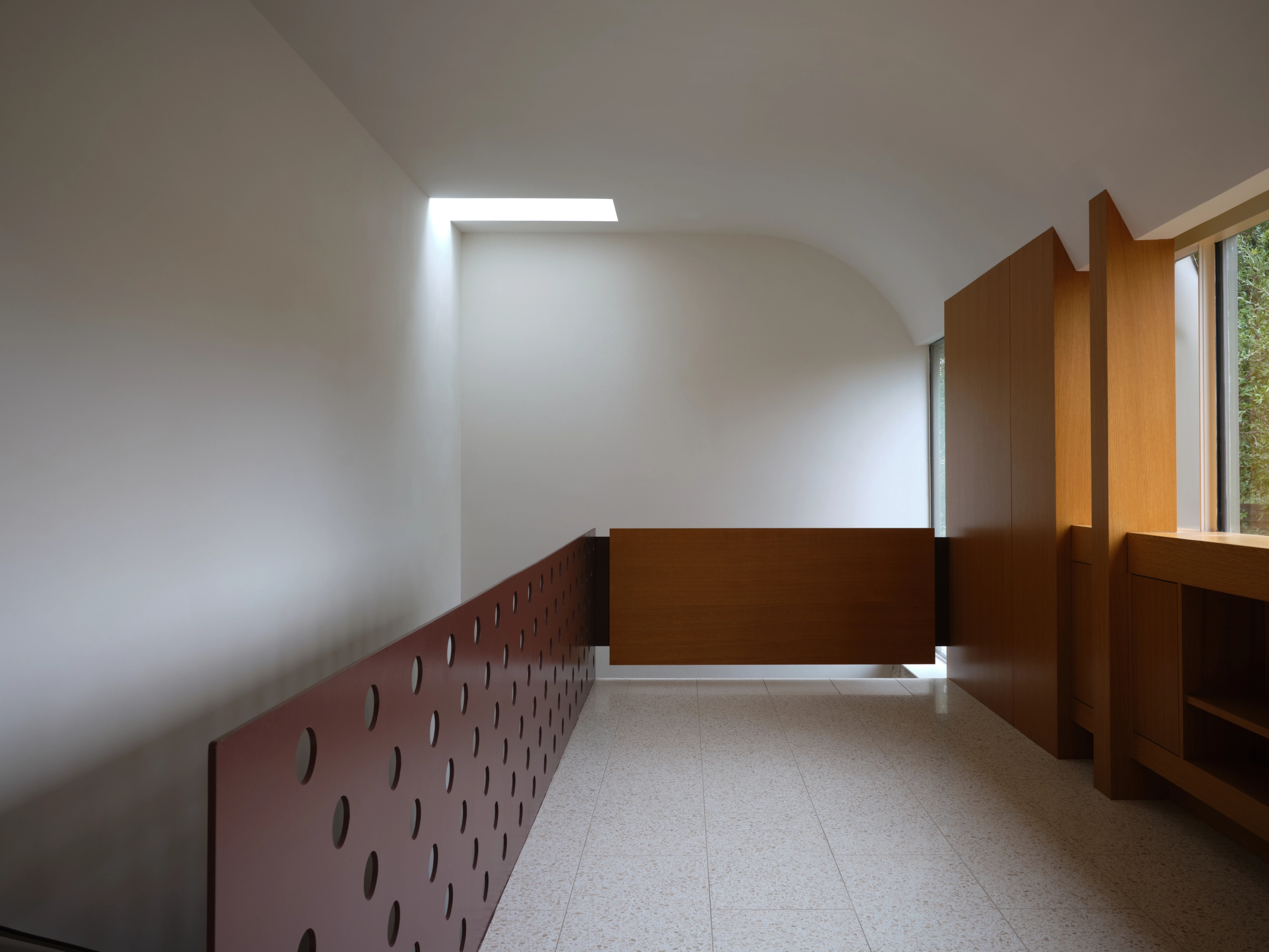
THE COMMODIFICATION OF SPACE
[OR; THE PROBLEM AT HAND]

The standard design approaches create beautiful facades that fail to function at the deeper level of human existence. They're spaces that photograph well but feel empty, look impressive but lack connection, appear finished but never feel complete, and leave most of their inhabitants in a state of perpetual change and wanting.

The cost is profound: We are missing the opportunity to know ourselves better through the art of creating a home. To awaken our own creative process, a fertile period to generate rather than just consume. We're missing the chance to explore our values, our aspirations, our identities and our truth. We create environments that have no relationship; spaces that take when they should give, that drain when they should nurture.

What's at stake when we pretend spaces are neutral commodities? Nothing less than our humanity. We leave potentiality on the table. We miss opportunities for awe, for beauty, for transcendence, connection, conversation, awareness, presence in our everyday experiences. Even washing dishes at the sink can become meditation when the space is properly calibrated to our truest self.

Most people have resigned themselves to this disconnection, never realizing there's another way — because they've never been shown how to truly inhabit the spaces they occupy. We're living through a collective crisis of disconnection from our most intimate environments. The design industry has reduced our relationship with space to a superficial transaction; treating homes as aesthetic statements and mere commodities rather than vessels for human transformation.

We've been taught to chase the next trend, the next piece, the next renovation. We’ve been told to believe that happiness lies on the other side of that purchase. This perpetual grasping keeps us in a state of constant dissatisfaction and disconnection rather than allowing us to exhale into what already surrounds us.

Designers are getting crash courses in human psychology because they're disrupting the most primal sense of security for families, yet they have zero training for the psychological dimension of this work. They're facilitating one of the largest emotional and financial investments people make in their lifetime, but they're approaching it like they're simply choosing colors and arranging furniture (because most are).

We've normalized living in spaces that actively work against our wellbeing because we don't know another way is possible.

Designers are getting crash courses in human psychology because they're disrupting the most primal sense of security for families, yet they have zero training for the psychological dimension of this work. They're facilitating one of the largest emotional and financial investments people make in their lifetime, but they're approaching it like they're simply choosing colors and arranging furniture (because most are).

We've normalized living in spaces that actively work against our wellbeing because we don't know another way is possible.

People approach their spaces with fear rather than possibility. Fear of choosing wrong, fear of spending too much, fear of not liking it years later. They look outward for approvals from marketing, social media and trend forecasts instead of inward to their own essence. They use inspiration boards filled with flattened pixels of someone else's life rather than excavating their own story.

The industry has reduced design to "picking things with good taste" — as if spaces were merely collections of aesthetically pleasing objects rather than integrated environments that shape the very human experience. This approach completely misses the calibration of atmosphere, light, temperature, moisture, sound, smell, touch and energy that transforms a room from a container into a catalyst.

The typical approach has flattened something hard and holy into something hollow.
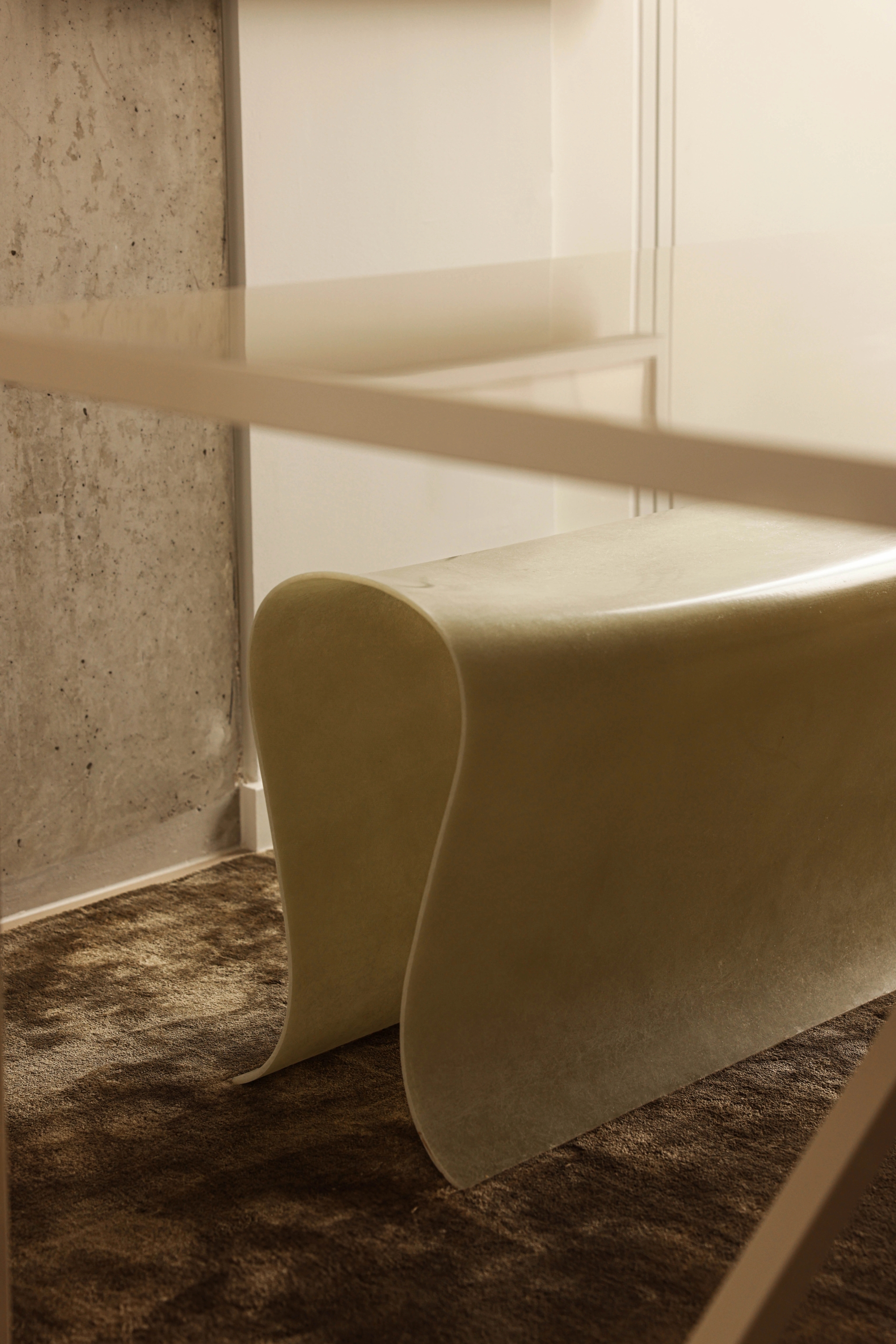
Lexicon

The discipline that recognizes spaces as active participants in human evolution rather than passive containers. Ontological Design goes beyond aesthetics and functionality to address how environments shape consciousness, identity, and becoming.

The mysterious transformation that occurs when our external environments align with our internal landscape. This alchemy changes not just how a space looks but how life unfolds within it. A celebration of the ripple effects in creativity, relationships, wellbeing and purpose. It's the science and magic of turning physical surroundings into catalysts for becoming.

The art of designing spaces that capture not just how someone wants to live, but who they truly are. These spatial portraits reveal aspects of the inhabitant that might remain hidden even to themselves and function as mirrors that reflect back their essence, aspirations, and truth.

Environments that vibrate in harmony with their inhabitants and create a felt sense of "rightness" that can't be articulated but is immediately recognized. These spaces feel alive, humming with a frequency that supports growth, creativity, and authentic expression.

The way our environments function as memory devices, constant, subconscious reminders of who we are and what matters. From the rock collected on a meaningful hike to the light pattern that evokes childhood comfort, these environmental cues bring us back to ourselves throughout the day.

Environments tuned with scientific precision to support specific states of being, moods, or activities. This calibration works with invisible elements — light quality, acoustic properties, thermal comfort, material resonance — orchestrating them into a cohesive whole.

The recognition of spaces as dynamic participants in our experience rather than static containers. These environments grow, adapt, and respond alongside their inhabitants and create a dance of mutual influence that evolves over time rather than remaining fixed.

A path beyond traditional architecture and interior design that honors both the scientific and the sacred dimensions of our relationship with space. This approach integrates rigorous research with intuitive knowing, blending quantum understanding with phenomenological experience.

The dual nature of transformative design, that requires both rigorous discipline and spiritual reverence. The hard: demanding self-examination, challenging conventions, refusing shortcuts, architectural and spatial rigor. The holy: A devotion, honoring the sacred relationship between people and their surroundings, treating space as a legitimate medium for transcendence.

OUR CURRENT CULTURAL TENSION

We're caught between two conflicting relationships with space.

On one side: a design industry that has reduced our environments to aesthetic statements and status symbols, creating spaces that look impressive in photographs but feel empty in experience.

On the other: a growing recognition that our surroundings profoundly impact our wellbeing, creativity and therefore sense of self. As Bachelard recognized, "inhabited space transcends geometrical space". Our homes are not just boxes that contain us but living entities that shape who we become.

The traditional approach to space has:

  • Prioritized visual impact over emotional resonance
  • Created environments for others' approval rather than personal experience
  • Treated design as a product rather than a process
  • Separated aesthetics from functionality and meaning
  • Ignored the neurological and psychological impacts of our surroundings
  • Perpetuated the cycle of consumption, always chasing the next trend
  • Reduced conversations about design to surface-level style preferences
  • Focused on "hyper-design" where more is more, regardless of meaning or connection
  • Treated spaces as two-dimensional products rather than three-dimensional experiences

What our homes reveal about what we're avoiding in ourselves is profound. We're avoiding our most alive selves, numbing out through screens and consumption rather than creating spaces that call us back to our essence. We're avoiding connection: with ourselves, with others, with the built and unbuilt world around us. We're avoiding pleasure, or seeking it in places that ultimately leave us empty and insatiable.

We recognize the power of sacred spaces. The awe of entering the Pantheon, the reverence of ancient temples. But somehow we’ve come to believe this experience is only possible in distant, monumental architecture. We've failed to see that the same power can exist in our everyday environments, that smaller gestures repeated over time can have profound impacts on our lived experience.

But something is shifting. People are awakening to the profound relationship between themselves and their spaces:

  • The pandemic forced a collective reckoning with our environments, particularly at home
  • Research increasingly confirms the neurological impacts of space
  • The sustainability movement has sparked questions about our relationship with objects
  • The wellness industry has highlighted the connection between surroundings and wellbeing
  • There's a growing hunger for authenticity and meaning in all aspects of life
  • People are seeking havens and constancy in an increasingly chaotic world

We're, collectively, at a cultural inflection point. The design world is clearly moving away from hyper-aestheticized spaces, but it's not yet clear what we're moving toward. Our work takes a stance on that future direction, one that honors the profound, reciprocal relationship between humans and their environments.

NOT YOUR MOTHER’S INTERIOR DESIGNER

Here, we invite you to forget what you know about architecture and interior design. We, primarily, create relationships between humans and their environments. Only when that is in place do we create a room.

While the industry obsesses over trends and Instagram moments, we aim to bridge the massive gap between what neuroscience tells us about space and human wellbeing, and what designers actually practice. Our work stands at the intersection of rigorous design training and deep psychological understanding.

Where traditional designers ask "how should it look?" we ask "how should it feel? What should it do? Who might you become within it?" Instead of starting with mood boards, we begin with days of excavation questions and guided inquiry exercises that bypass the thinking mind to access and give language to what our clients actually need (not what they think they want).

We don't just "pick things with good taste", we calibrate holistic atmospheres. We are architects of light, we modulate temperature, we orchestrate the rhythm and flow of movement through space. We work with the invisible elements many designers never consider: the emotional resonance of materials, the neurological impact of spatial relationships, the way objects carry energy and history. We gather a mountain of data from our clients’ true, lived experiences, then we begin to interpret and synthesize it via an attuned, intuitive process.

When we work, the experience is a full symphony in the body. Waves crashing, crescendos building. In iteration, everything aligns perfectly and then: silence. That moment of resonant completion cannot be forced, faked, or rushed. We might look through 279 chairs before finding the one that strikes the perfect chord, because we understand that every element affects the gestalt of the whole.

We're facilitating a process that reveals who people truly are. We help them excavate their story, calibrate their environment to their truest expression and a vision of themselves they want to embody and create spaces that function as daily reminders of their deepest truth. The process, in its entirety, is how our finished spaces consistently feel like the highest creative expression of our clients’ inner worlds, and one that feels intentional, soulful, and lasting to everyone else.

This, unequivocally, is where design should be heading. Toward spaces with a thick, juicy, reciprocal relationship in our lives. Space-as-self, as a vibrant practice, as a tango with our highest, most optimized selves.

THE ONTOLOGICAL DIMENSION AS A MEANINGFUL SOLUTION

Frankly, we think the design industry has reached its intellectual ceiling. Aesthetics without any consciousness, or function without any soul. On a global scale, we’re departing an era of spaces that serve the ego while starving the spirit.

Hardholy embraces the emergence of something reimagined for architecture and design — Ontological Design — a discipline that recognizes environments as active participants in human evolution rather than passive containers for living.

“First, we shape our buildings, and thereafter our buildings shape us.”. - Sir Winston Churchill

We reject the fundamental assumptions that have kept the industry intellectually impoverished:

  • That spaces can be neutral (they simply cannot, every environment either accelerates or inhibits becoming)
  • That beauty and meaning are separate pursuits (they are inseparable when consciousness is involved)
  • That design serves primarily aesthetic or functional needs (it serves consciousness first)
  • That profound spatial experiences require monumental architecture (they require intention, not scale)
  • That environments should reflect who you are (they should catalyze who you're becoming)

We embrace what the industry has been too timid to acknowledge:

  • Space as conscious collaboration between human and environment
  • Design as evolutionary catalyst, not decorative service
  • The recognition that consciousness shapes matter as much as matter shapes consciousness
  • Environmental intelligence as a measurable, calibratable, force
  • The understanding that once you experience true spatial resonance, everything else feels performative

This movement doesn't seek to improve interior design or architecture as we know it. It seeks to challenge and transcend it entirely. The change is overdue.

This is ontological design, applied to creative, high-end practice.

FROM DECORATED CONTAINERS TO RESONANT VESSELS [OR; WHY IT MATTERS]

This methodology transforms how people experience their lives within their spaces, instead of just how something looks.

Through the Hardholy Method, clients develop an entirely new relationship with space itself. They move from passive occupation to active collaboration, from aesthetic appreciation to energetic attunement and from trend-following to truth-embodying.

Clients will finally connect deeply with their spaces because they've unearthed the story they didn't even know they wanted to tell. By excavating their truth (not someone else's mood board or what their sister-in-law thinks they should do) they create environments that respond to their own internal song, rather than external pressures.

This transformation extends far beyond interior design:

  • Instead of constantly questioning "does this look right?" they develop unshakeable confidence in their choices because they emerge from deep self-knowledge rather than external validation. Our clients see this reflected in quicker design timelines, little to zero revisions, and significant reduction in billable hours.
  • Rather than having spaces that look "fine" but feel empty, they create environments so distinctive and thoughtfully curated that guests are thrilled to experience.
  • Their decision-making process transforms from overwhelming paralysis to intuitive clarity, they can walk into any space and immediately sense what belongs and what doesn't, which makes them invaluable contributors to the design conversation.
  • Instead of apologizing for their unique or "quirky" choices, they become known among their social circle as someone with impeccable, enviable taste that can't be replicated or bought off a showroom floor.Rather than living in spaces that depreciate through trend cycles, they invest in environments that increase in both monetary and emotional value over time, often selling collectible pieces or entire homes for significantly above market rate.

This deepened relationship with space creates ripple effects throughout their lives:

  • They stop seeking validation from design magazines and start being featured in them, their homes become case studies for what's possible when design meets authentic self-expression.
  • Their home becomes the place everyone wants to gather, which deeply enriches and transforms their lives and the connections within them, and turns them into natural hosts whose dinner parties and events become legendary in their community.
  • They develop the vocabulary to articulate what they need from their environment, which makes it easy and seamless for them to grow with their spaces instead of out of them.
  • Instead of feeling like their success is invisible, they inhabit spaces that communicate their sophistication and depth without saying a word, their environment becomes their greatest storyteller.
  • They begin to understand that true luxury isn't a question of expense but environments that nurture the soul while impressing the intellect.
  • Their investment in thoughtful design pays dividends not just in daily satisfaction but in long-term asset appreciation, social capital, and the kind of respect that comes from knowing yourself deeply enough to express it beautifully.

Unlike spaces designed around trends, these environments stand the test of time. They don't need to be redesigned every few years because they weren't created to follow fashion, they were created to embody truth. This isn't just an aesthetic investment, it's an investment in longevity, in sustainability, in a relationship with space that deepens rather than diminishes over time.

We believe in ripple-effects. The end result isn't just the home base. The end result is the person that we take out into the world and what that person chooses to do with their days and the lives they encounter.